

The Tunnel is both a passage and a vessel — a conduit between the here-and-now and an unknown destination.
Its journey begins in tension, as the gap widens between what we expect and what we actually feel inside the Tunnel. That widening space breeds disorientation and vulnerability — where is it taking us, and why?
As resistance gives way, the Tunnel's primal language surfaces — sonic masses, light, pressure, motion. Vast cloud-like sonic formations gather and pass through the vessel, imparting clear directionality. Their tangible presence and large scale reframe our sense of scale, bringing attention inward.
Deeper in the Tunnel, the focus narrows to the self — what should I feel; what do I feel? The journey turns contemplative. Ultimately, like a tilted mirror, the Tunnel reveals new angles of the self.
Concept and Sound: Wolfgang Gil
Architecture: Miyuki Oba
Concept Overview
Enter the Tunnel is a 50.2-channel immersive sound installation that takes place in a dark space, where abstract masses of sound take shape as they swell and thin throughout the length of the listening space, stretching through walls, floor, and ceiling. The installation comes in two modes: a fixed 20–40 minute loop version, as well as a generative version where the sequencing of these cloud-like sounds is chosen in the moment using a probability model.
The piece was conceived by Wolfgang Gil in 2021, and it's currently being re-imagined in response to moving his art studio from Newark, NJ, to Tokamachi, Niigata, home of the Echigo-Tsumari Art Festival.
The unique configuration of the sound system, combined with the abstract nature of the sonic material, its physical presence and continuous movement through space, and the near-total absence of visual stimulus, creates an unfamiliar sonic experience for most visitors. Drawing on their own memories and experiences of music, sound, and creative expression, visitors inevitably bring learned expectations of what a sonic artwork should sound or feel like. As these expectations encounter unfamiliar and constantly evolving sonic masses, a subtle mental dissonance emerges. The work uses this gap as a space for exploration, shifting attention away from what sound is expected to be and toward the immediate, bodily experience of what is actually being heard.
The sonic material combines drones, field recordings, and granular synthesis, woven together across both space and duration. Two distinct qualities give a sound its object-like character: spatial behavior and texture. Spatial behavior sets the boundary — defined enough to give a sound a distinct, recognizable identity, yet never fixed: that boundary continuously swells and thins as the sound unfolds. Texture determines what fills that boundary, drawn from a range of tones, grains, and colored noises; each sound mass is built from its own unique arrangement of these elements, rather than settling into a single fixed quality. These two qualities are not composed in sequence; they emerge together, grain by grain, sound and position shaped as a single, inseparable act. This way of shaping sound is what gives rise to the piece's central perceptual effect. A sound can feel close or distant, immense or minuscule, not as an illusion added onto the space, but as something built directly into the sound itself.
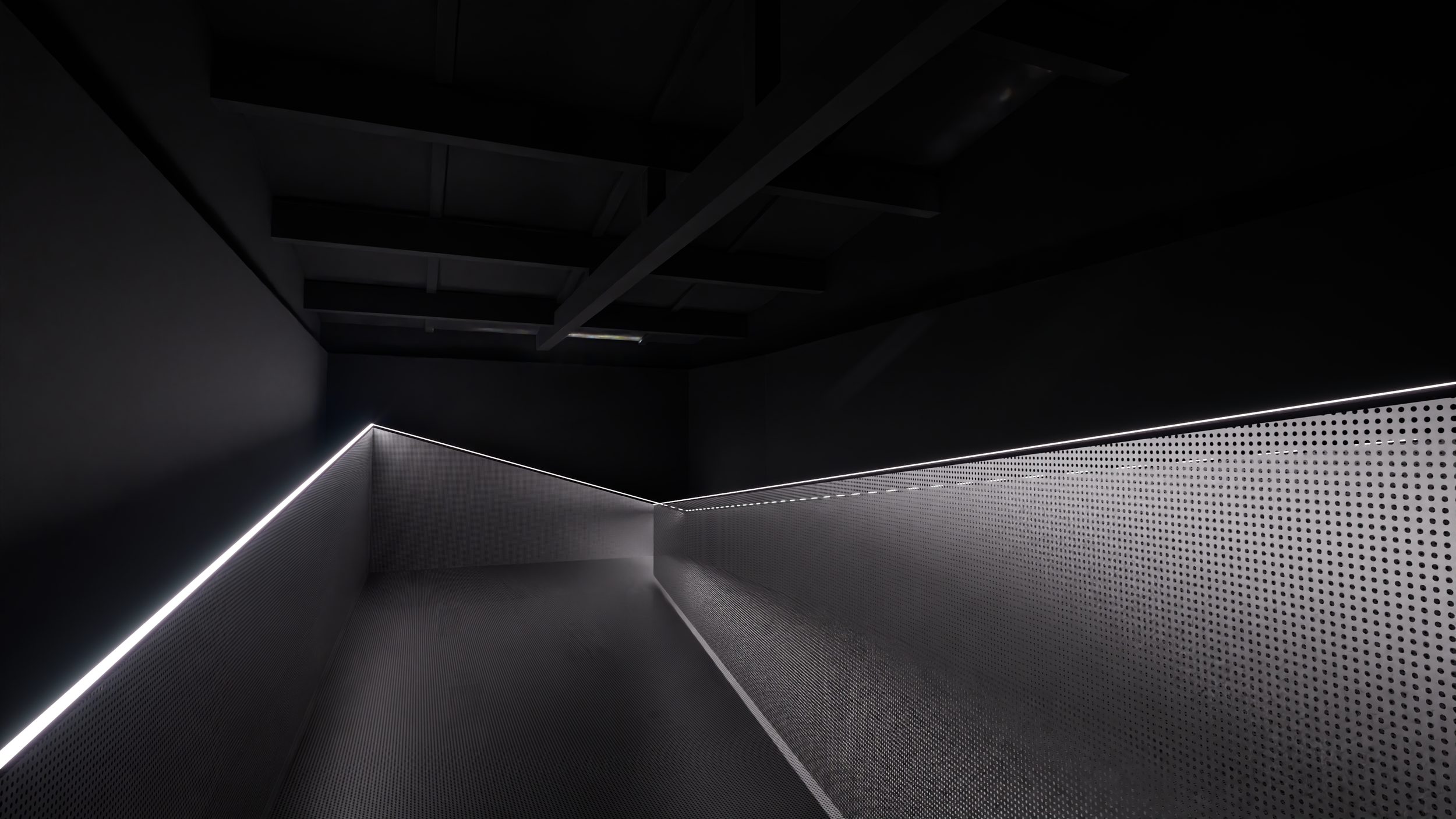
Platform (perspective #1) design study by Miyuki Oba. A perforated steel platform at the center of the installation lets visitors stand above the floor speakers, positioned to keep appropriate separation from both floor and wall speakers so the spatial image renders clearly. This elevation also lets sound be heard rising and falling between floor and ceiling.
Motion studies for Enter the Tunnel by Wolfgang Gil. This video shows how sonic agents, represented by lines in the video, are governed by computer logic to move, interact with one another, and with the virtual environment. Collision detection, hard borders, gravity, and other simulated forces such as wind can affect these agents' behavior over time. Each agent reports its spatial location and collision status, which is then used as control parameters by the sonic engine.
Within an almost entirely dark space, these sonic masses emerge from speakers positioned vertically and horizontally throughout the environment at floor, ear, and ceiling levels. Each sound always begins at the front of the space and travels the full length of the chamber toward the back, giving the experience a strong and consistent sense of directionality. As it moves, it continuously expands and contracts, shifting in density, proximity, and scale along the way. The only light comes from a soft spotlight rendered beneath the visitor's own feet — a pool of glow that stirs when they move, settles when they are still, and shifts further with whatever sound happens to be passing through that same point in that same instant. It offers no view of the space itself, only a quiet trace of presence and sound meeting, briefly, in one place. Without any real visual confirmation, visitors are left to rely on their bodies as their primary reference point.
This blurring of internal and external experience is not new territory for Gil. The work builds upon Gil's previous multichannel installations, including the 8.1-channel Aural Fields Zero (Not Here, Nor There), presented at the Newark Museum in New Jersey, USA, and at Contrast Gallery in Tokyo, and Broken Continuum, presented at Diapason Gallery and Eyebeam in New York City. These pieces explored sound spatialization constrained to the plane created by the speaker system, allowing Gil to develop his tools for sound making. Enter the Tunnel is a permanent sound installation where sound takes form beyond the traditional surround setup, placing greater emphasis on the listener's own perceptual and bodily experience. The work is concerned not only with what sound does in space, but with what happens within us as we attempt to understand it. The focus gradually shifts from "What am I hearing?" to "How am I listening?"
Ultimately, Enter the Tunnel is less a journey to a distant or imaginary place than an invitation to move deeper into one's own perception. By challenging the expectations through which we normally understand our surroundings, the work creates an opportunity to encounter the space between what we think we know and what we physically feel.
Artist Background
Wolfgang Gil has spent about a decade designing and producing large-scale spatial sound and technology-driven installations, first in New York City and now in Niigata, Japan. For six years, he operated a studio in Newark, New Jersey functioning as an art studio, sound research lab, and creative technology agency, delivering complex technical installations for clients including Audible, Microsoft, Ford, American Express, and Shopify. This work earned two Clio Awards, including one for a generative AI soundscape created in collaboration with Björk.
He previously served three years as Eyebeam's IT Specialist and Technology Manager, overseeing technical infrastructure for one of New York's leading media arts organizations, and three years as the Senior System Administrator for the MFA Interaction Design program at the School of Visual Arts. He has designed and operated multichannel sound systems up to 30 channels, along with multiple 8.1-channel installations exhibited internationally, providing direct technical grounding for the 50.2-channel system Enter the Tunnel requires. He also conceived, designed, and technically directed the audio experience for the permanent Harriet Tubman Monument in Newark, NJ, USA — a large-scale, fabricated public installation delivered on a fixed timeline, closely comparable in scope and permanence to this project.
Miyuki Oba is a Japanese architect born in Okayama. In 2013, she worked at ROLDÁN+BERENGUÉ Arquitectos in Barcelona through a MEXT study-abroad program. She received her Master’s degree in Architecture from Meiji University in 2015 and joined Mitsubishi Jisho Design the same year. Her practice spans multiple scales, from furniture to nurseries, housing, offices, hotels, and guesthouses. She spent nine years designing an office building that will become Mitsubishi Jisho Design’s new headquarters in 2027. Her work has received the Good Design Award.

2017–2019: Gil’s studio in Newark, New Jersey, hosted a 30.2 sound system, with three rows of 10 speakers each positioned at floor, ear, and ceiling levels. This setup allowed virtual sources to be placed anywhere within the planes formed by the speaker arrangement.
Methods, Materials, and Dimensions
A 50.2-channel sound installation consisting of 50 full-range speakers and 2 subwoofers. Speakers are distributed across the walls, along the perimeter of the floor, and on the ceiling of a minimally lit space approximately 12 m long × 5–7 m wide × 3–4 m high, creating an immersive "cloud of sound."
Handrails and flooring will use porous, acoustically transparent materials.
Inside the main chamber, the floor itself becomes a second, quieter instrument: a pressure-sensing surface that glows faintly beneath each visitor's feet, its shape shifting with their movement and with whatever sound is passing through that same point. It does not illuminate the room — only the point where body and sound happen to meet.
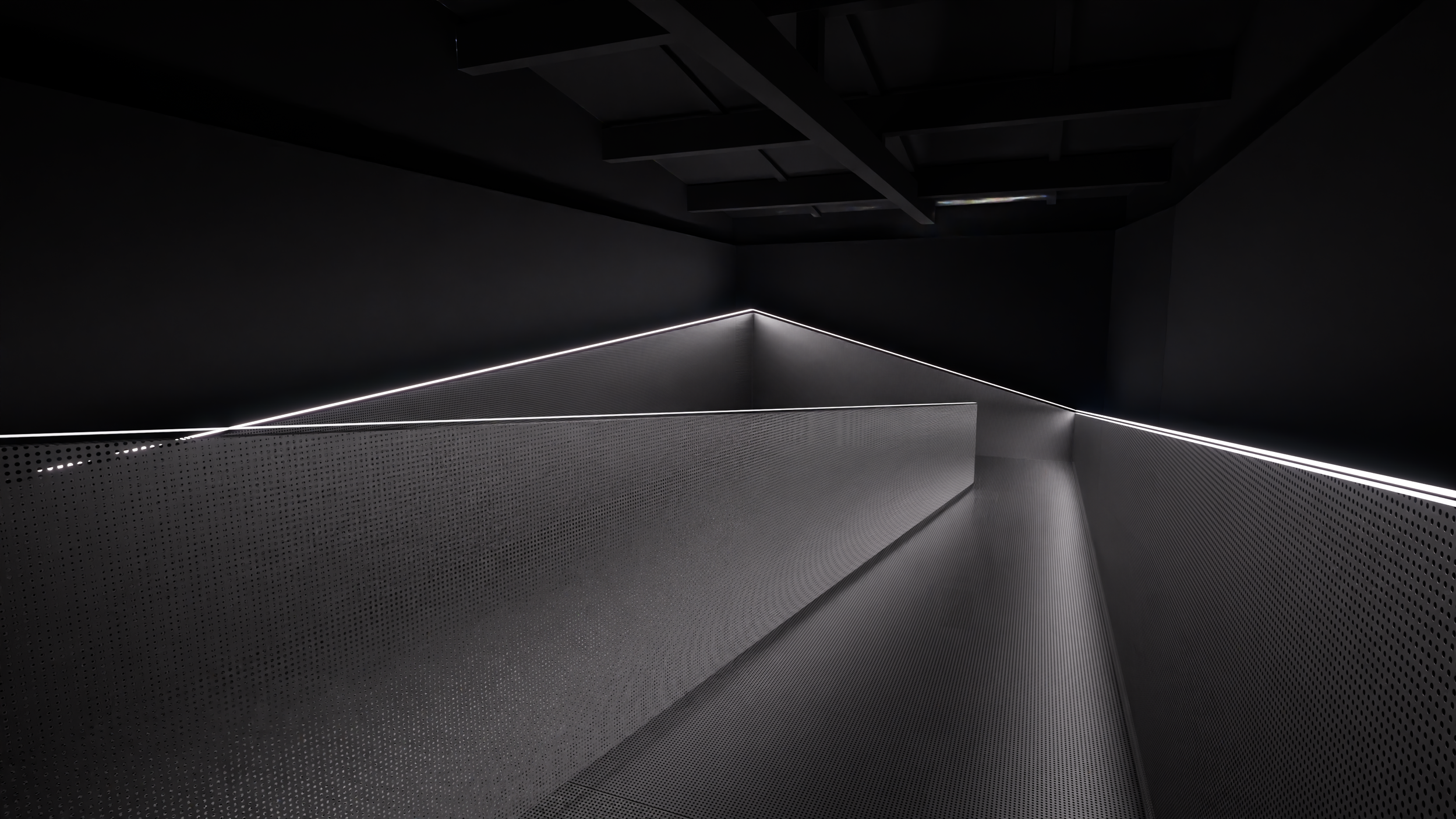
Platform (perspective #2) design study by Miyuki Oba. A perforated steel platform at the center of the installation lets visitors stand above the floor speakers, positioned to keep appropriate separation from both floor and wall speakers so the spatial image renders clearly. This elevation also lets sound be heard rising and falling between floor and ceiling.

To create the tunnel-like experience and the sense of standing inside a cloud-like sonic formation, speakers are placed on the walls, floor, and ceiling. A perforated steel platform at the center of the installation lets visitors stand above the floor speakers. This intentional separation heightens a sense of spatial elevation, as sound can be heard rising and falling between floor and ceiling.
Relationship Between the Venue, Echigo-Tsumari, and Tokamachi
This project follows Echigo-Tsumari's long-standing practice of revitalizing existing buildings as artworks, accommodation facilities, and community spaces by transforming an ordinary private house into the venue for the work. Rather than using a hypothetical site, the project will take place in an existing building already acquired by the artist.
The venue is Honk-Tweet, an art space, educational center, and coffee shop built inside a house in Gejo, Tokamachi City — a building many local residents still call by its former name, Yamaki Residence.
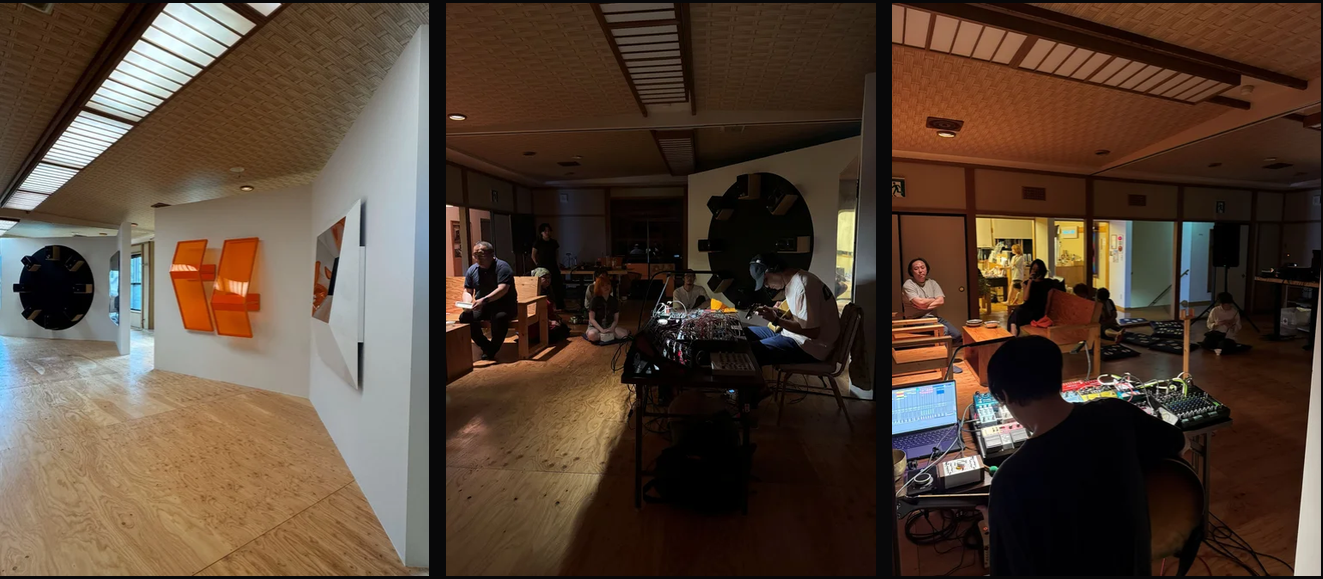
Honk-Tweet Gejo's main gallery is named the Dietlinde and Wolfgang Giloi Gallery, in thanks to Eva Giloi's generous contribution to our crowdfunding campaign. It currently displays the same exhibition Gil presented at Contrast Tokyo back in 2024, and is also where recurring events like OTO LAB, concerts, workshops, and private events take place.
For decades, Yamaki Residence was a place where local residents gathered for important private and communal celebrations — including birthdays, weddings, and class reunions common in Japan, where groups who graduated together 20 or 30 years earlier still return to mark the occasion. Honk-Tweet is building on that community spirit, offering a space for locals to gather and enjoy good drinks, food, and coffee, while adding a robust sound program accessible to national and international audiences and artists alike, through workshops, concerts, artist residencies, and, of course, immersive installations such as Enter the Tunnel.
The building is currently being transformed into a cultural hub, Honk-Tweet, operated by artists and their collaborators. Educational programs, live music events, and a range of locally focused activities have already begun — including OTO LAB, a monthly event bringing together sound artists, musicians, and sound enthusiasts to talk about their work, tools, and process, while sharing their compositions and live performances with the audience. OTO LAB also invites local food vendors to sell their food during the event, supporting the local economy while making the event more appealing to a general audience. Enter the Tunnel is conceived as a permanent sound installation that will become a new focal point for these activities, working alongside existing programs to increase visitors to Gejo and give local residents a reason to return to Yamaki Residence, encounter one another again, and reconnect with the site.
Equally important, during the off-season, the installation will function as a research facility for spatial acoustics, listening practices, and participatory formats, and as core infrastructure for an international artist-in-residence program welcoming artists, musicians, and researchers from Japan and abroad. In exchange, resident artists are required to give back to the community directly — conducting workshops and lectures for local children and young people through Honk-Tweet's educational program.
This work responds to a real and measurable need. Tokamachi City's own demographic data show the scale of the challenge: the city's under-15 population fell from 5,855 in 2018 to 4,473 in 2024, a decline of nearly 24% in six years, while its total fertility rate dropped from 1.78 to 1.24 over roughly the same period. Average household size has fallen to 2.46 people, as three-generation households give way increasingly to single-person and elderly households. Gejo has felt this pressure directly — as has the wider Echigo-Tsumari region, where the effects are sometimes stark: nearby, the former Kaino Elementary School closed in 2021 after its student population fell too low to sustain it, and has since been repurposed as a winter glamping and camping facility, Setsugen Gakusha. No single project can reverse a trend of this scale, but every initiative that puts Gejo and Tokamachi on the cultural map — drawing visitors, artists, and renewed attention to the area — helps keep it a living, attractive place rather than one defined only by its decline.
Despite this pressure, Gejo currently retains a fuller set of services than many comparably sized rural settlements, several of which have already lost one or more of these outright: a kindergarten and elementary school, a post office, a branch of Kenshin Bank, a local clinic residents refer to as Gejo's hospital, a dental office, active farming, two operating construction companies, and a convenience store. The goal here is not to reverse Tokamachi's broader demographic trend, which is unlikely to be within any single project's reach, but to help keep Gejo above the threshold that allows these services to keep operating — the point past which a school or clinic closes, often permanently, taking further population and momentum with it.
Technical Overview
Format: 50.2-channel sound installation (50 full-range speakers + 2 subwoofers).
Spatial dimensions: Approximately 12 m long × 5–7 m wide × 3–4 m high. The installation is designed specifically for Honk-Tweet's second-floor space in Gejo, sized to its existing architecture.
Speaker placement: Arranged at three distinct heights — floor level, ear level, and ceiling level — enabling sound to move in front/back, left/right, and up/down directions, with particular emphasis on long front-to-back trajectories and an immersive "cloud of sound."
Spatial audio processing: A custom multichannel design using object-based or bus-based routing allows precise control over the movement of sound masses, subtle textures, distance, and dynamic changes in perceived scale.
Lighting: A pressure-sensing LED floor responds to visitor movement and is further modulated by the sound passing through that same point at that moment, dimming when the visitor is still. No lighting is used to reveal the architecture of the space itself.
Operation and presentation: The installation operates continuously in a 20–40 minute loop. A limited number of visitors enter at designated times to ensure an environment conducive to focused experiences. Visitors are not required to enter at the start of the loop and are free to leave at any point during their visit.
Sound level and calibration: Sound levels will be measured and calibrated by audio professionals to remain within recognized public exposure safety guidelines while still being strongly felt physically. Acoustic treatment and sound absorption will be implemented with consideration for neighboring residences and the surrounding sound environment. The specific intensity of the sound's physical presence, described throughout the Concept Overview, is not fixed at this stage — it will be tuned through iterative testing during sound design and installation, calibrated toward a sense of wonder and contemplation rather than discomfort.
Accessibility and safety: Visitors walk up a gently sloped, handrail-equipped ramp within the dark chamber. As is typical for small-scale installations and galleries throughout the region, staffing is limited: Honk-Tweet's shop manager is on-site during regular visiting hours but not stationed inside the installation itself. Entry is entirely voluntary and self-directed, consistent with how immersive works are generally experienced in this context, and given the extended darkness, the experience may not suit every visitor.
Off-season use: As described above, the system continues to serve as a research and residency platform outside the exhibition period.
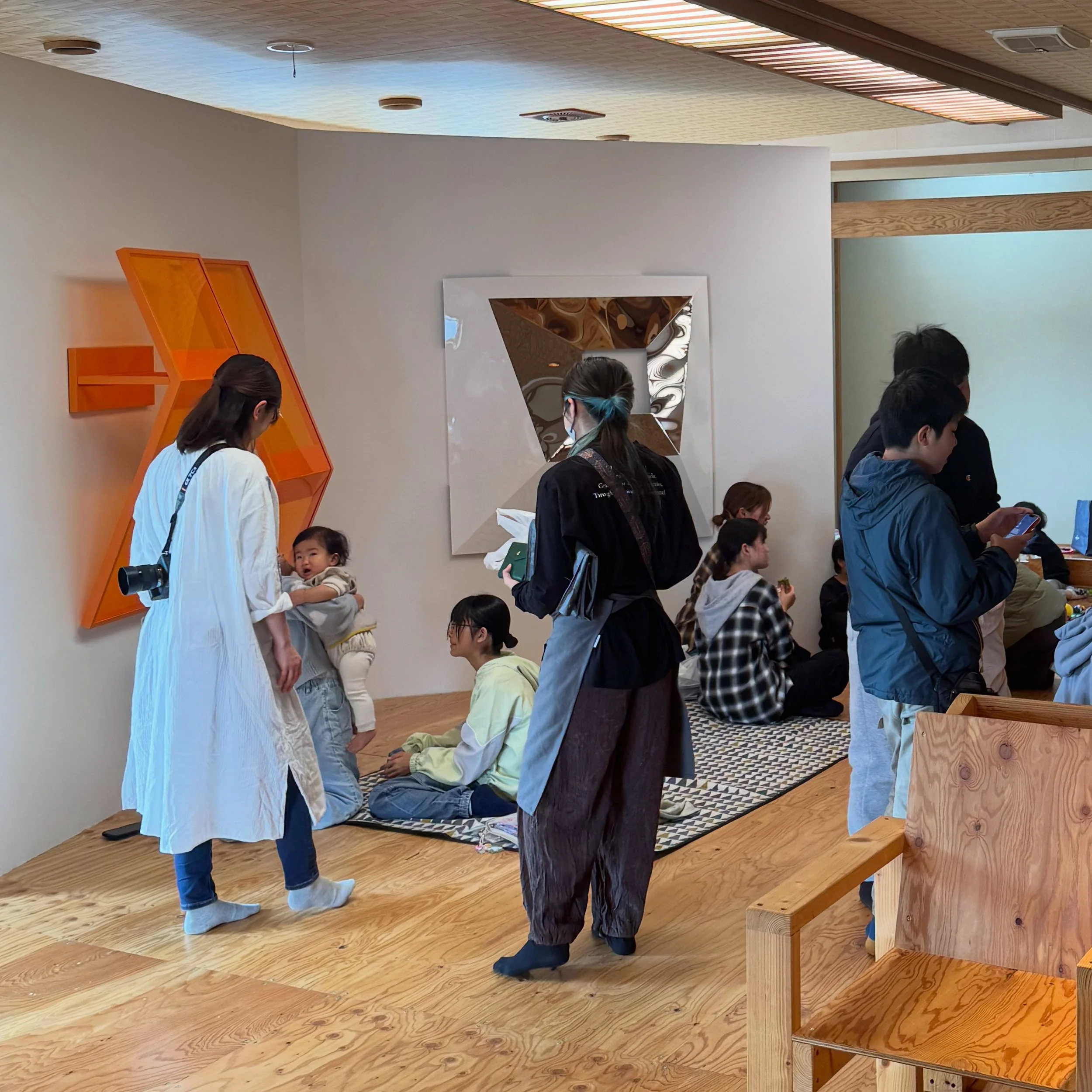
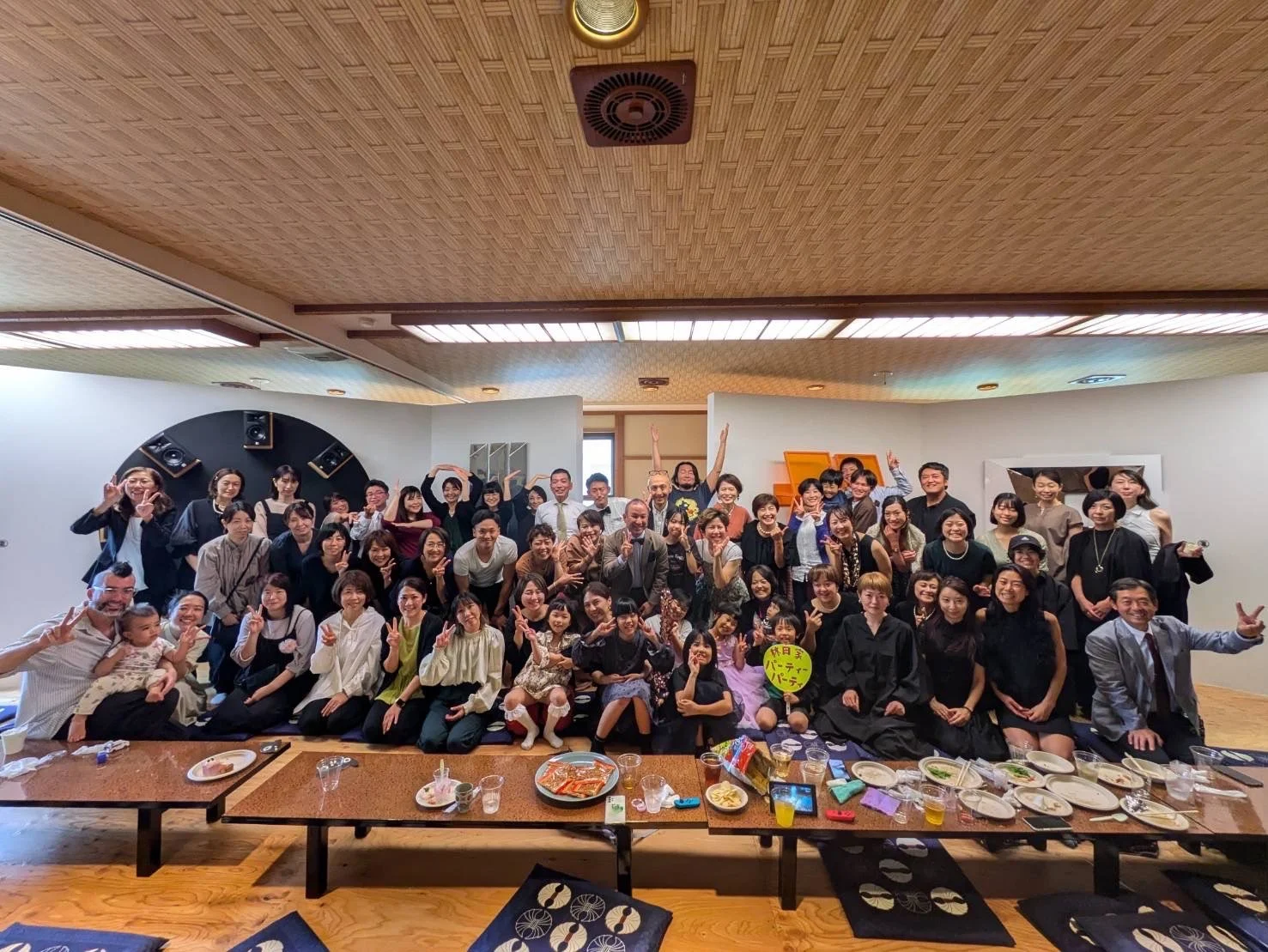
The Cross-Local event, a two-day gathering organized by Mariko Fujita, brought together vendors and community members from Tokamachi and Tsunan to share food, drinks, and ideas. On the second day, Honk-Tweet hosted the Tsunan vendors in Gejo.
Community and Education Programs
Building on Echigo-Tsumari's emphasis on community, memory, and long-term relationships, the following programs are planned for Enter the Tunnel:
Listening workshops / lectures: Experiential workshops and talks for local residents and visiting students exploring how attention, memory, and environment influence the perception of sound.
Sound walks: Sound walks connecting the installation with the surrounding settlements, rice fields, and rivers, in dialogue with the "inner sound tunnel" and the outer sounds of water, wind, insects, snow, and everyday life in Gejo.
Off-season laboratory use: The same research and residency program described above continues year-round, with resident artists sharing their process through workshops, small-scale presentations, and open studios.
OTO LAB: A recurring event inviting local and international artists to perform live and speak briefly about their creative process, sometimes demonstrating how their instruments or tools work. Local food vendors are invited to cook and sell alongside each event, bringing together audiences drawn by music and by food alike.
Live concerts and DJ nights: Beyond OTO LAB, additional live music and occasional DJ nights are held throughout the year, broadening the range of audiences the space regularly draws in.
Through these activities, advanced acoustic technology and experimental art are introduced in connection with everyday life in the community, creating opportunities for people of all ages to encounter sound art, learn new skills, and participate directly in the creation of new work.
Contribution to Echigo-Tsumari
Enter the Tunnel resonates with Echigo-Tsumari's mission of connecting art, nature, and regional revitalization — building on the reuse of Yamaki Residence and the off-season research and residency infrastructure described above, and adding to them in three specific ways:
An internal counterpart to the festival's outward focus: Where Echigo-Tsumari's broader mission engages the external landscape, this project turns attention toward the landscapes of perception and sensation that arise within the visitor — a complementary, rather than equivalent, kind of encounter with self and place.
A positive presence for the town's younger population: Tokamachi's own 2023 survey of families, conducted for its 2025–2029 Children's Plan (十日町市こども計画), found that families with elementary-school-age children report meaningfully lower satisfaction with the local childcare and family environment — 20.9% satisfied, a rating that had fallen sharply since the previous survey — than families with preschool-age children, at 24.6% satisfied. Separately, when the city surveyed its 13-to-18-year-olds directly on where they most want to spend their free time, the single most common answer, by a wide margin, was simply having a place to casually gather with friends. The project responds to that gap directly.
Ripple effects for regional revitalization: Attracting artists, researchers, and audiences to Gejo is intended, over time, to bring additional business to the shops, food vendors, and services already described above — though, like the population trend itself, this is a hoped-for effect rather than one the project can guarantee or measure in advance.
In this way, Honk-Tweet — with Enter the Tunnel at its center — functions not only as a cultural venue but as a "house for listening": a place where the external landscape meets the internal one, allowing Yamaki Residence to continue as a living site for gathering, dialogue, and introspection.